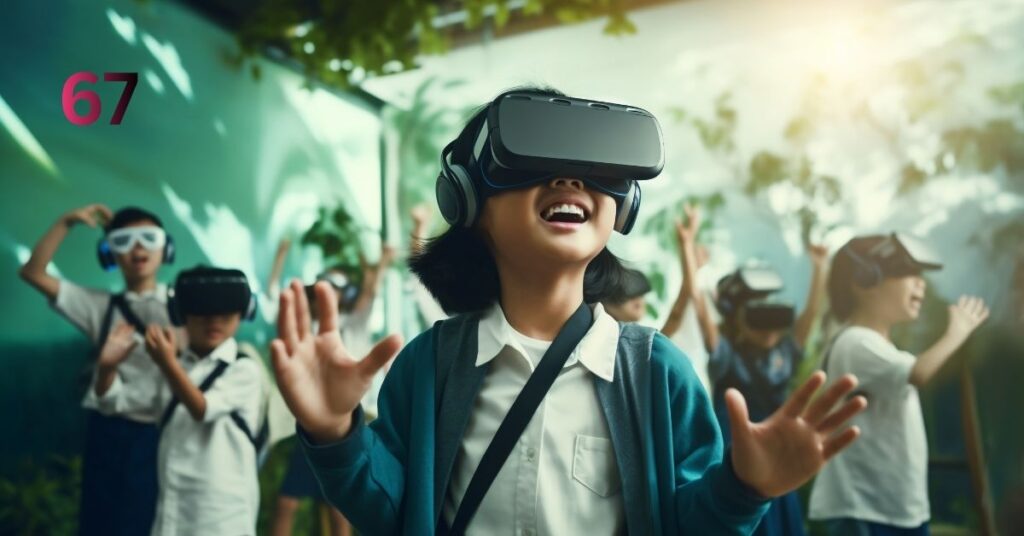

Education is undergoing a structural shift. Traditional systems—built for industrial-era needs—are increasingly misaligned with today’s dynamic, skills-driven world. Nova Scola, meaning “new school,” represents a decisive move toward a more adaptive, human-centered model of learning. It prioritizes understanding over memorization, capability over credentials, and growth over rigid outcomes. This approach is not a trend; it is a response to a clear gap between what learners are taught and what real life demands.
What Nova Scola Truly Means
Nova Scola is not a single institution or curriculum. It is a framework for modern education built on flexibility, relevance, and personal development. It redefines learning as an evolving process rather than a fixed system. Students are not treated as identical units moving through standardized pathways; instead, they are individuals with unique strengths, goals, and learning styles. This shift transforms education into something more aligned with human potential and real-world complexity.
The Philosophy Behind Nova Scola
At its core, Nova Scola is guided by three principles: personalization, application, and integration. Learning is tailored to the individual, connected to real-world contexts, and designed to cross traditional subject boundaries. Knowledge is not delivered as isolated facts but as interconnected ideas that reflect how the world actually works. This philosophy ensures that education becomes meaningful, practical, and intellectually engaging rather than mechanical or repetitive.
Personalized Learning as a Standard, Not a Luxury
Nova Scola places personalization at the center of the learning experience. Each student progresses based on their pace, interests, and capabilities. This eliminates the inefficiencies of one-size-fits-all education and allows learners to fully grasp concepts before moving forward. Educators act as mentors who guide and refine each student’s journey. The result is a deeper understanding, stronger confidence, and a learning process that feels relevant rather than imposed.
From Theory to Real-World Mastery
A defining feature of Nova Scola is its emphasis on practical application. Students engage in projects, simulations, and real-life problem-solving scenarios that mirror professional and societal challenges. This approach ensures that knowledge is not abstract but actionable. Learners develop the ability to think critically, adapt quickly, and apply concepts effectively. By bridging the gap between theory and practice, Nova Scola produces individuals who are not only informed but also capable.
Interdisciplinary Learning: Reflecting the Real World
Real-world problems rarely belong to a single discipline, yet traditional education often isolates subjects. Nova Scola removes these barriers by integrating multiple fields into cohesive learning experiences. A single project may involve science, communication, ethics, and technology simultaneously. This method strengthens cognitive flexibility and helps students understand how different domains interact. It prepares them to approach complex challenges with a broader and more effective perspective.
The Strategic Role of Technology
Technology in Nova Scola is purposeful, not excessive. Digital tools support personalized learning, provide access to global knowledge, and enable interactive experiences. Adaptive systems can track progress and suggest improvements, while online platforms expand learning beyond physical classrooms. However, technology does not replace human interaction. Mentorship, discussion, and emotional intelligence remain central, ensuring that learning retains its human depth and meaning.
How Nova Scola Outperforms Traditional Education
Nova Scola introduces a structural upgrade to how education functions:
- Learning Approach: Active engagement replaces passive listening
- Curriculum Design: Flexible pathways replace rigid structures
- Assessment Style: Demonstrated skills replace exam memorization
- Teacher Function: Guidance replaces one-directional instruction
- Student Identity: Creator and thinker replace passive recipient
This transformation leads to stronger retention, higher engagement, and better real-world preparedness.
Skill-Based Education: The Core of Future Readiness
Modern economies reward adaptability, not repetition. Nova Scola aligns with this reality by embedding essential skills into every aspect of learning. Students develop communication, critical thinking, collaboration, and emotional intelligence alongside academic knowledge. These competencies are not treated as secondary—they are fundamental. This ensures that learners are equipped not just to enter the workforce but to evolve within it.
Real-World Implementations of Nova Scola
While Nova Scola is a concept, its principles are already visible in progressive education systems worldwide. Private academies, hybrid schools, and digital learning platforms are adopting elements such as project-based learning, flexible curricula, and mentorship-driven teaching. These implementations demonstrate that Nova Scola is not theoretical—it is practical, scalable, and already shaping how education is delivered across different environments.
Challenges That Define Its Evolution
No transformative model is without obstacles. Nova Scola requires skilled educators who can guide personalized learning effectively. Standardization remains a challenge, especially in systems built around uniform testing. Adoption can be slow due to institutional resistance. However, these challenges are not weaknesses—they are part of the transition toward a more refined and effective educational structure.
Why Nova Scola Is Gaining Global Momentum
The rise of Nova Scola is driven by clear global trends: the demand for adaptable skills, the growth of digital learning, and increasing dissatisfaction with outdated systems. Employers are prioritizing capability over credentials, and learners are seeking education that delivers tangible value. Nova Scola aligns perfectly with these shifts, making it one of the most relevant and future-focused educational models today.
Conclusion: The Blueprint for Modern Education
Nova Scola is more than a reimagining of education—it is a necessary evolution. By combining personalization, real-world application, and skill development, it addresses the core limitations of traditional systems. It prepares learners not just to succeed academically but to thrive in a complex, ever-changing world. As education continues to evolve, Nova Scola stands as a clear and compelling blueprint for what learning should become.
FAQs
Q. What is Nova Scola in simple terms?
Nova Scola means “new school” and refers to a modern education model focused on personalized, practical, and skill-based learning.
Q. Is Nova Scola a school or a concept?
It is primarily a concept, though some institutions and platforms use the name.
Q. Why is Nova Scola important today?
It addresses the gap between traditional education and real-world demands by focusing on adaptability and critical skills.
Q. Does Nova Scola replace traditional education completely?
Not entirely, but it significantly improves and evolves traditional methods.
Q. Who benefits most from Nova Scola?
Students who thrive in flexible, engaging, and real-world-oriented learning environments benefit the most.