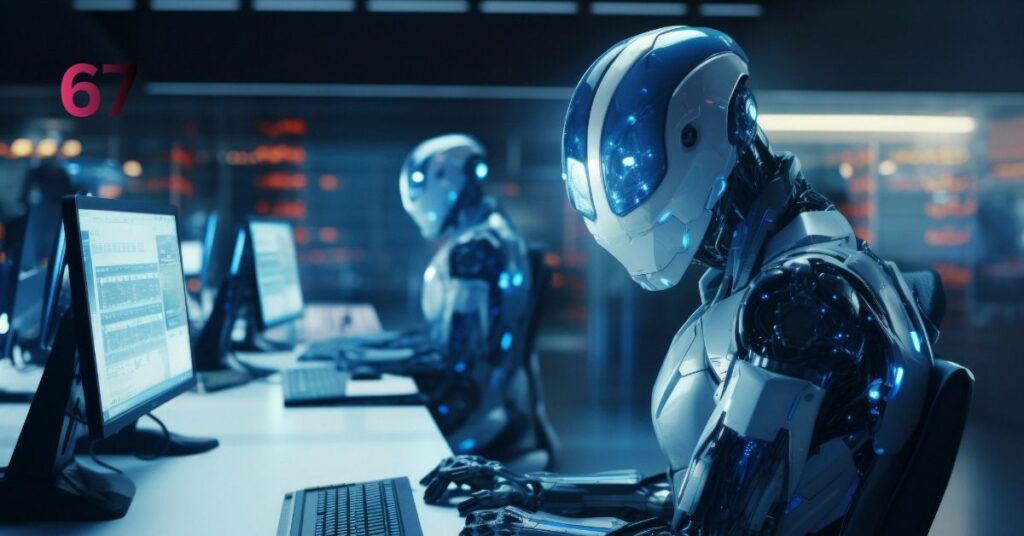

The phrase “Ponas Robotas” has rapidly gained attention across technology discussions, AI communities, and digital culture conversations. While many people recognize it as the Lithuanian translation of “Mr. Robot,” the term now represents something much larger: the growing relationship between humans, artificial intelligence, cybersecurity, and intelligent machines.
Today, Ponas Robotas symbolizes the collision between futuristic robotics and human identity. It reflects a world where AI assistants speak naturally, robots perform real work, cybersecurity threats evolve daily, and machines increasingly influence society. As robotics technology expands into healthcare, transportation, homes, and industries, the meaning of Ponas Robotas continues to evolve beyond entertainment into a broader cultural and technological movement.
This article explores the origins, technological significance, ethical concerns, and future implications behind Ponas Robotas in a clear, authoritative, and deeply researched way.
What Does Ponas Robotas Mean?
“Ponas Robotas” directly translates from Lithuanian into English as “Mr. Robot.” The phrase combines:
- “Ponas,” meaning gentleman, sir, or mister
- “Robotas,” meaning robot
Originally, the term became associated with the globally recognized psychological thriller television series Mr. Robot. However, modern internet culture transformed the phrase into a broader technological concept linked to artificial intelligence, hacker culture, robotics innovation, and digital society.
The popularity of the phrase grew because it sounds both futuristic and human. Unlike purely technical AI terminology, Ponas Robotas creates a psychological image of a machine with identity, intelligence, and personality. That human-machine fusion is exactly what modern robotics is attempting to achieve.
As AI systems become conversational, adaptive, and emotionally responsive, the phrase now represents far more than a television reference. It has become symbolic of humanity’s next technological era.
The Cultural Influence of Mr. Robot
The television series Mr. Robot profoundly influenced public discussions surrounding cybersecurity, surveillance, mental health, and digital power structures. The show’s realistic depiction of hacking and cyber warfare helped create widespread interest in hacker culture and technological ethics.
The central character, Elliot Alderson, represented a modern digital rebel navigating a world dominated by corporate control and mass surveillance. Because of its realism, the series attracted programmers, cybersecurity professionals, ethical hackers, and technology enthusiasts worldwide.
The Lithuanian adaptation of the title—Ponas Robotas—carried the same emotional and technological weight. Over time, search behavior surrounding the phrase expanded into related topics, such as
- Artificial intelligence
- Intelligent automation
- Digital privacy
- Machine learning
- Cybersecurity risks
- Robotics ethics
- Human-AI interaction
This crossover between entertainment and real technology helped the keyword evolve into a high-interest informational topic.
Why Ponas Robotas Resonates in the AI Era
Modern society increasingly interacts with intelligent systems every day. AI now powers:
- Virtual assistants
- Recommendation algorithms
- Autonomous vehicles
- Facial recognition systems
- Industrial automation
- Smart healthcare devices
Because of this shift, people are searching for language that humanizes technology. Ponas Robotas resonates because it gives artificial intelligence a recognizable identity rather than presenting it as cold machinery.
The phrase captures a growing reality where machines are no longer passive tools. Instead, intelligent systems now make decisions, analyze behavior, predict outcomes, and communicate naturally with humans.
This transformation explains why interest in robotics, AI ethics, and machine intelligence continues to rise globally.
The Evolution of Intelligent Robotics
Robotics has evolved dramatically over the past two decades. Earlier robots were limited to repetitive industrial tasks inside factories. Modern robots, however, combine artificial intelligence, computer vision, sensor technology, and machine learning to interact dynamically with the environment.
Today’s intelligent robots can:
- Recognize speech
- Interpret emotions
- Navigate spaces autonomously
- Analyze massive data sets
- Assist in surgery
- Perform warehouse logistics
- Support elderly care
Humanoid robotics is also progressing rapidly. Machines are becoming more human-like in movement, communication, and behavior. This development strengthens the symbolic relevance of Ponas Robotas because society increasingly sees robots as interactive entities rather than mechanical devices.
The future of robotics is no longer theoretical. It is actively reshaping industries worldwide.
Ponas Robotas and Cybersecurity
One of the strongest themes connected to Ponas Robotas is cybersecurity. As AI systems become more advanced, digital security threats become increasingly complex.
Modern cyber threats now involve:
- AI-driven phishing attacks
- Deepfake identity fraud
- Automated malware
- Data manipulation
- Intelligent surveillance systems
- Autonomous cyberattacks
The connection between robotics and cybersecurity is particularly important because intelligent machines often rely on cloud networks, sensors, and real-time data exchange. A compromised robotic system can create serious consequences in healthcare, transportation, finance, or infrastructure.
Cybersecurity experts increasingly emphasize that future robots must be built with ethical safeguards, encryption systems, and strong defensive architectures. Intelligent automation without security creates dangerous vulnerabilities.
This concern is one reason why Ponas Robotas continues to symbolize both technological advancement and technological anxiety.
The Human Psychology Behind Humanized Robots
Humans naturally assign emotional characteristics to machines that communicate intelligently. This psychological effect is known as “anthropomorphism”—the tendency to perceive non-human objects as human-like.
When robots speak naturally, maintain eye contact, or respond emotionally, people instinctively form psychological connections with them. This explains why conversational AI and humanoid robots attract so much fascination.
Ponas Robotas reflects this psychological phenomenon perfectly. The phrase sounds personal rather than mechanical. It creates emotional familiarity with artificial intelligence.
Researchers studying human-machine interaction have discovered that people often trust machines more when those machines appear socially intelligent. However, this creates ethical questions about emotional dependency, manipulation, and digital influence.
As AI companions become more realistic, society must carefully balance innovation with psychological responsibility.
Real-World Robotics Already Changing Society
Many people still imagine intelligent robots as futuristic concepts, but advanced robotics already operates across numerous industries.
Healthcare Robotics
Hospitals now use robotic systems for the following:
- Precision surgery
- Rehabilitation therapy
- Medication delivery
- Patient monitoring
AI-assisted healthcare improves accuracy while reducing human error in certain procedures.
Industrial Automation
Manufacturing industries rely heavily on robotics for:
- Assembly lines
- Packaging
- Logistics
- Quality control
Automation has increased efficiency while reducing operational costs globally.
Smart Home Robotics
Modern homes increasingly integrate the following:
- AI-powered assistants
- Robotic vacuum systems
- Smart surveillance devices
- Intelligent energy systems
These technologies demonstrate how robotics is becoming embedded in everyday life.
Transportation and Autonomous Systems
Self-driving technologies continue advancing rapidly through AI-powered navigation, sensor fusion, and machine learning algorithms.
Autonomous systems are expected to transform:
- Shipping
- Delivery services
- Public transportation
- Logistics infrastructure
The robotic future is already underway.
Ethical Questions Surrounding Ponas Robotas
As robotics grows more intelligent, ethical concerns become unavoidable. Technological power without moral responsibility can create significant societal risks.
Several major ethical questions dominate modern AI discussions.
Should robots make human decisions?
AI systems already influence:
- Hiring processes
- Financial approvals
- Law enforcement analysis
- Medical recommendations
This raises concerns about bias, accountability, and transparency.
Can AI Replace Human Labor?
Automation may eliminate millions of repetitive jobs while simultaneously creating new technology-driven careers. Governments and industries must adapt to changing labor realities.
Who Controls AI Systems?
Large corporations increasingly control massive amounts of behavioral and personal data. Ethical governance and transparency remain critical challenges.
Could intelligent machines become manipulative?
As conversational AI becomes emotionally persuasive, concerns surrounding digital manipulation continue to grow.
The future of robotics depends not only on technological capability but also on ethical responsibility.
The Future of Ponas Robotas and AI Society
The next decade may represent the most important technological transition in modern history. Artificial intelligence and robotics are expected to influence nearly every sector of society.
Future developments may include:
- Fully autonomous delivery systems
- AI-powered healthcare diagnostics
- Advanced humanoid assistants
- Robotic elderly care
- Intelligent city infrastructure
- Emotionally responsive AI companions
At the same time, concerns surrounding privacy, surveillance, misinformation, and cyber warfare will continue to intensify.
Ponas Robotas represents this dual reality. It symbolizes both innovation and caution. Society stands between extraordinary technological advancement and profound ethical responsibility.
The future will depend on how humanity chooses to guide intelligent systems.
Why the Fascination With Human-Like AI Continues Growing
People are fascinated by intelligent robotics because it reflects deeper human questions about identity, consciousness, and the future of civilization itself.
Human-like AI forces society to ask the following:
- What makes humans unique?
- Can machines truly understand emotions?
- Should robots possess rights?
- Will AI strengthen humanity or weaken it?
- Can intelligence exist without consciousness?
These philosophical questions explain why Ponas Robotas captures attention beyond simple entertainment or technology news. It touches psychology, sociology, ethics, philosophy, and digital culture simultaneously.
Very few modern technological concepts combine so many dimensions of human curiosity.
The Environmental Side of Advanced Robotics
One emerging discussion surrounding robotics involves sustainability and environmental impact. Intelligent automation has the potential to improve energy efficiency and reduce waste when implemented responsibly.
AI-driven systems can optimize the following:
- Energy consumption
- Transportation routes
- Manufacturing efficiency
- Agricultural productivity
- Resource distribution
Smart robotics may help reduce emissions through precision automation and predictive optimization.
However, large-scale AI infrastructure also consumes enormous computational power. Data centers, cloud systems, and AI training models require substantial energy resources.
The future of robotics must therefore balance innovation with sustainable environmental practices.
Conclusion
Ponas Robotas has evolved far beyond a translated television title. Today, it represents the intersection of artificial intelligence, robotics, cybersecurity, digital psychology, and human identity.
The phrase captures a world rapidly transitioning toward intelligent automation and human-machine interaction. From cybersecurity concerns to ethical AI development, the concept reflects both excitement and caution surrounding the technological future.
As robotics becomes increasingly integrated into healthcare, transportation, homes, communication, and industry, society must carefully shape how intelligent systems operate within human life.
The future of Ponas Robotas is ultimately the future of humanity’s relationship with intelligent technology itself.
Frequently Asked Questions
Q. What does “Ponas Robotas” mean?
Ponas Robotas is the Lithuanian translation of “Mr. Robot.” The phrase is now associated with artificial intelligence, robotics, cybersecurity, and digital culture.
Q. Is Ponas Robotas connected to the TV series Mr. Robot?
Yes. The term originally became popular as the Lithuanian title for the television series Mr. Robot. Over time, it evolved into a broader AI and robotics-related keyword.
Q. Why is Ponas Robotas becoming popular online?
Interest in AI, intelligent robotics, cybersecurity, and futuristic technology has significantly increased worldwide, making the term more relevant across digital discussions.
Q. Are intelligent robots already being used today?
Yes. Robotics is actively used in healthcare, manufacturing, logistics, transportation, smart homes, and industrial automation.
Q. What are the biggest risks of advanced AI robotics?
Major concerns include cybersecurity threats, privacy violations, ethical misuse, algorithmic bias, and large-scale automation impacts on employment.
Q. Will humanoid robots become common in the future?
Many experts believe humanoid robotics will become increasingly common as AI, machine learning, and robotics engineering continue advancing rapidly.